
Electric water heaters fail in a few very specific ways, and the symptom usually tells you where to look. No hot water anywhere suggests a tripped breaker, a tripped high-limit reset, or a failed upper element or upper thermostat, because the upper side controls when the lower side gets power. A tank that delivers a few minutes of hot water and then runs lukewarm suggests the lower element or lower thermostat. Water that comes out scalding points to a thermostat stuck closed or an element shorted to the tank, which is also what trips the red reset button. Those are the calls we answer most in Conroe, TX, and nearly all of them are fixable.
Conroe Water Heater tests electric heaters with a meter, not a hunch. With power confirmed off, our technicians measure element resistance and look for a short to the tank, a common failure that can keep tripping the high-limit. Then, following careful live-testing procedure, we verify voltage at the thermostats and watch how power moves from the upper side to the lower side. We look for scorched wires, melted insulation, and loose terminal screws, since a loose connection can heat up enough to damage the thermostat and the wiring around it. If the reset button has tripped, we find out why before resetting it, because a high-limit that trips is doing its job.
Most electric water heater repairs are finished in one visit. We replace burned-out elements (draining the tank first and refilling it completely before power goes back on, since an element energized in open air burns out in seconds), replace upper and lower thermostats and high-limit switches, repair scorched wiring and loose connections, and flush out sediment that is burying the lower element. When the tank is leaking or the heater has passed about twelve to fifteen years, we tell you honestly and walk you through replacement. New installations include confirming that the circuit, breaker, and wire size match the heater, plus an expansion tank, drain pan, and seismic straps wherever code calls for them. We can also talk through a heat pump water heater if lower operating costs appeal to you. Call (936) 226-0905 and we will get your hot water back.
Most of our service calls are for Water Heater Repair in Conroe and Water Heater Installation in Conroe. Start there if you're not sure what you need.
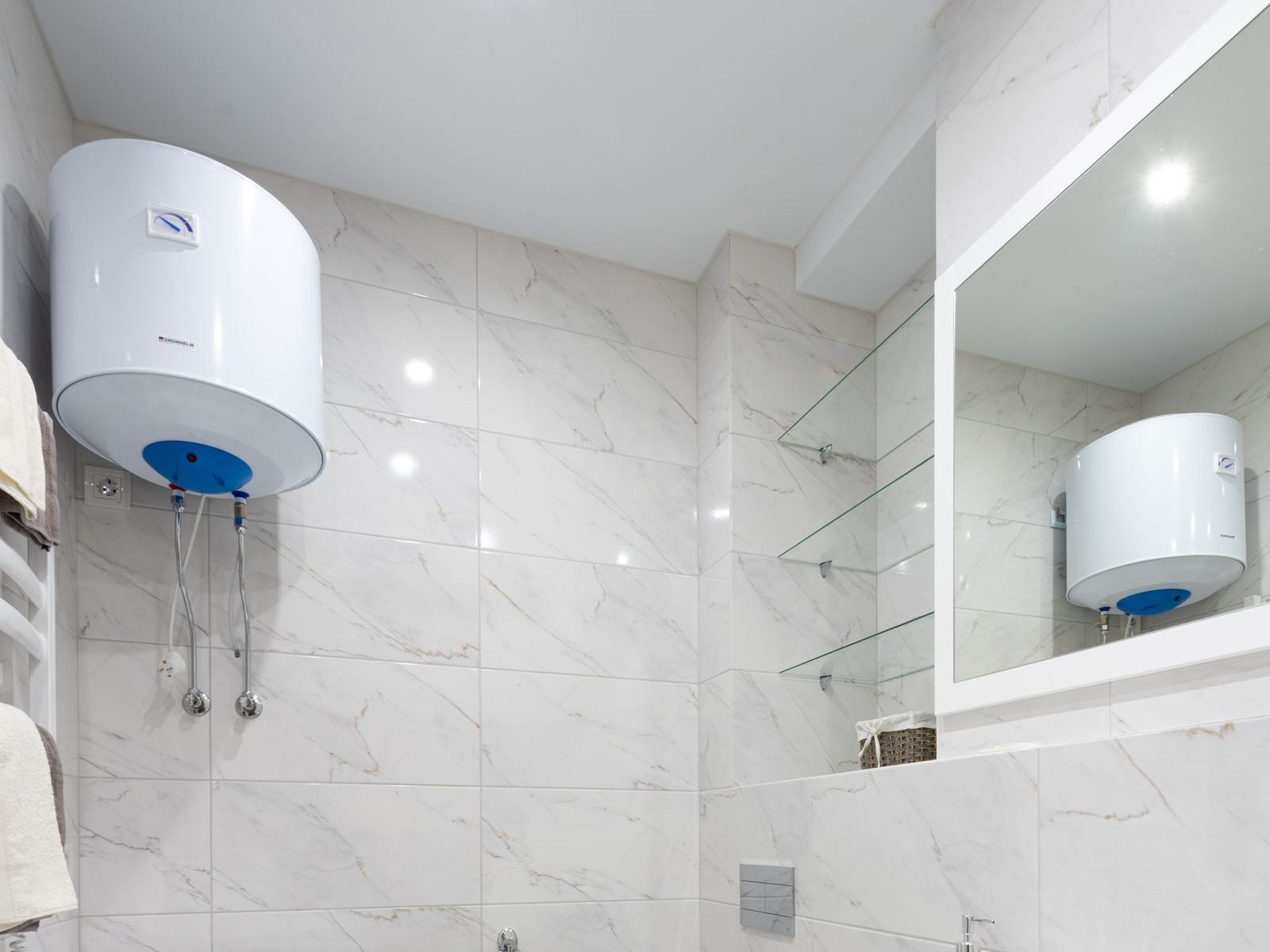
Signs You Need Electric Water Heater Services in Conroe
Most tanks announce trouble weeks or months ahead with rumbling noises, rusty water, or hot showers that keep getting shorter. Here are the most common indicators that it's time to call a professional:
- Crackling noises as the heater runs, often from sediment
- A short burst of hot water, then nothing but tepid
- Rust-colored hot water or moisture around the heater
- The high-limit reset popping again after you push it
- A circuit breaker for the heater that will not stay on
- Dangerously hot water, a sign a thermostat may be stuck
- A burning smell or a discolored access panel near the thermostat
- No hot water at all from any faucet
Act Before It Gets Worse
A worn-out anode rod, a sediment-choked tank, or a weak thermocouple rarely fixes itself, and the repair usually costs more the longer it waits. A quick call to (936) 226-0905 gets a technician out to check it before it becomes an emergency.
No Hot Water? We Can Help.
We'll diagnose the problem and give you a straight answer on the fix.
Get Help: (936) 226-0905Electric Water Heater Services FAQ
The Benefits of Professional Electric Water Heater Services
Consider the risks first. A standard electric water heater is a 240-volt appliance on a dedicated circuit, and both thermostats sit a finger's width from live terminals. A slipped screwdriver or a missed step in shutting off power can cause a serious shock or an arc flash. Then there is the diagnostic puzzle: no hot water can mean a tripped breaker, a tripped high-limit, a failed upper element, or a bad upper thermostat, and each part replaced on a guess costs time and money. Element replacement adds another trap, because an element powered before the tank is full burns out almost instantly.
Professional service gets you the right fix the first time and a safe heater afterward. Instead of guessing, we meter each element and thermostat, check for shorts to the tank, and inspect every wire and terminal for heat damage. Repairs are done with the tank drained and refilled correctly, and we verify amp draw once power is back on. When replacement makes more sense, we confirm the breaker size and wire gauge match the new heater and install the expansion tank, drain pan, or seismic straps your code requires. You end up with hot water you can count on.
Step by Step: How a Visit Works
We work through a clear, repeatable process so you always know what's happening and what it will cost. Here's exactly how a typical visit unfolds:
Meter-Based Diagnosis
Before anything is replaced, we confirm power at the heater and test each element, thermostat, and connection to pinpoint what stopped the water from heating.
Straight Answers & Firm Price
Nothing hidden on the invoice. We explain the fault, quote the fix up front, and let you know if replacement is the better value on an aging heater.
Safe Repair
Failed elements and thermostats are typically swapped the same visit. We drain and refill the tank properly so a new element is never powered dry.
Full Performance Test
A repair is not done until it is proven. We verify amperage on the elements, confirm the thermostats cycle properly, and set the temperature to about 120 degrees for safety.
Not Sure What You Need?
Tell us the age, fuel type, and symptoms, and we'll help you sort out the next step.
Call (936) 226-0905 TodayTips to Keep Your Water Heater Healthy
Routine maintenance is almost always cheaper and easier than an early replacement. Here are our recommendations:
- Replace a worn anode rod before corrosion moves on to the tank itself
- Make sure water flows steadily from a hot tap before the heater's power goes back on
- Drain a few gallons from the bottom of the tank periodically to control sediment
- Keep the thermostats set around 120 degrees to save energy and reduce scalding risk
- Consider a water softener if you have hard water, since it slows sediment and scale on the elements
- Get a diagnosis for any reset button that trips more than once
- Lift the T&P valve lever yearly to make sure it opens and reseats
Doing It Yourself vs. Hiring a Technician
The line between a safe DIY check and a risky repair is usually the moment you need to open a gas fitting, a vent connection, or an electrical cover. Here's how the two approaches stack up:
| Factor | Doing It Yourself | Professional Service |
|---|---|---|
| Finding the Fault | Swap parts until the water heats | Every element and thermostat metered |
| Shock Hazard | Working near 240V without verifying it is off | Circuit tested dead, then work begins |
| Element Replacement | Leaky gasket from a rushed install | Proper gasket seal and full refill |
| Reset Button | Push reset and hope it holds | Cause of the trip found and fixed |
| Sediment | Minerals left to shorten element life | Honest read on the tank's remaining life |
| Outcome | Temporary fix at best | Root cause fixed and verified |
Get Electric Water Heater Services Help Today
Cold showers and damp floors don't get better on their own. Conroe Water Heater can have a technician headed your way soon.
Tap to Call (936) 226-0905Where We Provide Electric Water Heater Services
Our technicians handle electric water heater services throughout Conroe and the surrounding communities, with the same upfront pricing everywhere we work.